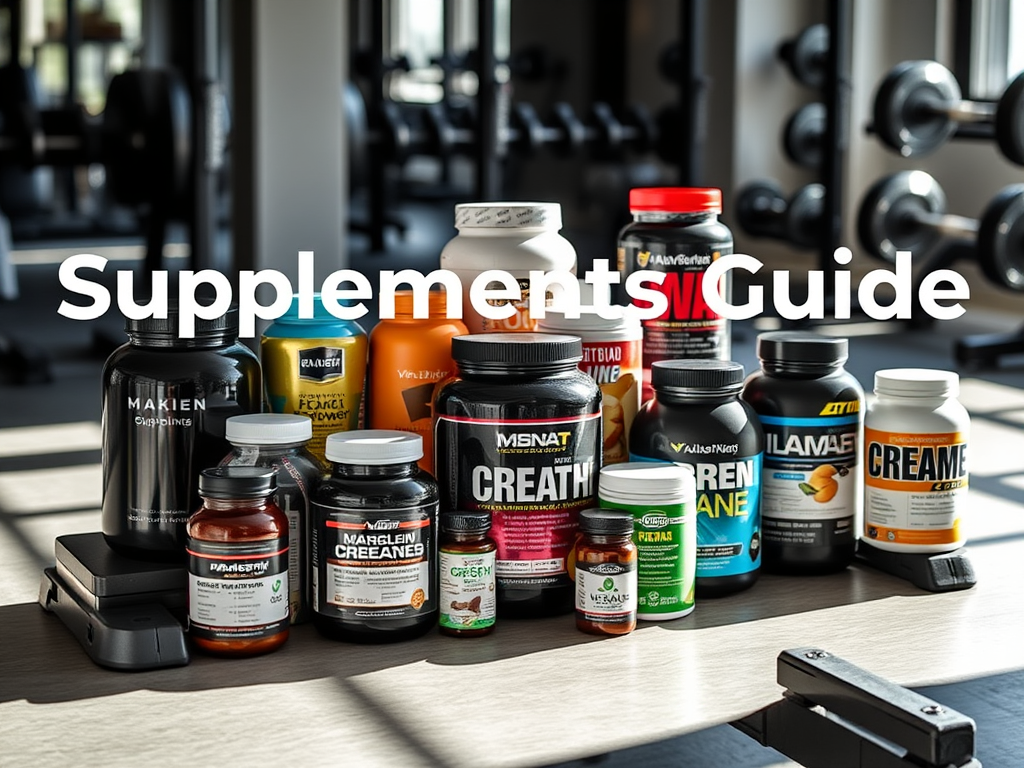
If you’re new to lifting, supplements can feel like a cheat code…
…but most of them are either:
- unnecessary
- overpriced
- or way less important than training + nutrition
This guide covers the main bodybuilding supplements (the ones you’ll see everywhere), what they do, how to take them, and whether they’re actually worth buying.
No fluff. Just the real “starter stack.”
The Only Supplements That Truly Matter (Beginner Stack)
1) Whey Protein
What it does: Helps you hit your daily protein target easily.
Best for: Busy people, low appetite, inconsistent meal planning.
How to take it:
- 1 scoop = usually 20–30g protein
- Use it anytime: breakfast, post-workout, or as a snack
Worth it? ⭐⭐⭐⭐⭐
If you struggle to hit protein daily, whey is one of the best buys.

My personal recommendation for beginners who don’t want to spend too much.
2) Creatine Monohydrate
What it does: Improves strength, training performance, and muscle fullness over time.
Creatine is easily the most studied supplement in sports nutrition.
How to take it:
- 3–5g daily, every day (timing doesn’t matter)
- No need to “cycle”
- Drink water like a normal person
Worth it? ⭐⭐⭐⭐⭐
The #1 supplement for lifting performance.

My go-to creatine for beginners — simple, effective, and budget-friendly.
3) Caffeine (Coffee or Pre-Workout)
What it does: Improves energy, focus, and training intensity.
How to take it:
- Start with 100–200mg 30–45 min pre-workout
- Don’t take it too late (sleep matters more than any supplement)
Worth it? ⭐⭐⭐⭐☆
If you train early or feel low-energy, caffeine helps a lot.
Secondary Supplements (Useful, But Not Essential)
4) Fish Oil (Omega-3)
What it does: Supports general health (inflammation, joints, heart health).
Not a “muscle builder,” but can support long-term performance.
How to take it:
- Look for EPA + DHA content on the label
- Common target: 1–2g EPA+DHA/day
Worth it? ⭐⭐⭐☆☆
Great if your diet is low in fatty fish.
5) Vitamin D3
What it does: Supports hormone function, mood, recovery, and general health.
Many people are low in vitamin D depending on sunlight exposure.
How to take it:
- Common dose: 1000–2000 IU/day
- Best taken with food
Worth it? ⭐⭐⭐☆☆
Useful if you don’t get much sun.
6) Magnesium (Glycinate or Citrate)
What it does: Helps sleep quality, relaxation, and muscle function (especially if you’re low).
How to take it:
- 200–400mg/day
- Many people take it at night
Worth it? ⭐⭐⭐☆☆
Great for sleep support and recovery habits.
Gym “Hype” Supplements (What to Know Before You Buy)
7) Pre-Workout (Pump / Focus / Energy Blends)
Pre-workouts can work, but most are just:
- caffeine + flavoring
- sometimes underdosed ingredients
Best ingredients to look for:
- Caffeine (most effective)
- Citrulline malate (6–8g) for pump
- Beta-alanine (3.2g) for endurance (tingles are normal)
Worth it? ⭐⭐⭐☆☆
Nice to have, but coffee + creatine covers most of the benefit.
8) BCAAs
What they are: Branched-chain amino acids.
Reality: If you eat enough protein, BCAAs are usually redundant.
Worth it? ⭐☆☆☆☆
Not needed for most lifters.
9) Fat Burners
They don’t “burn fat” the way people think. Most are:
- caffeine-based stimulants
- appetite suppressors
- marketing
Worth it? ⭐☆☆☆☆
Fat loss = calorie deficit + consistency. Save your money.
10) Test Boosters
Most over-the-counter “test boosters” have weak evidence and exaggerated claims.
Worth it? ⭐☆☆☆☆
Hard pass.
The Best Supplement Stack (Simple & Effective)
If you want the highest ROI stack:
✅ Creatine Monohydrate (3–5g daily)
✅ Whey Protein (as needed to hit protein)
✅ Caffeine (optional, pre-workout)
That alone covers 90% of what supplements can realistically do.
Optional “health add-ons”:
- Vitamin D3 (if low sunlight)
- Omega-3 (if low fish intake)
- Magnesium (if sleep/recovery needs help)
How to Choose Good Supplements (Quick Checklist)
When buying supplements, look for:
- simple ingredient labels
- transparent dosing
- no “proprietary blends”
- third-party testing (when possible)
- products you can take consistently
And remember:
Supplements don’t replace:
- progressive overload training
- daily protein intake
- sleep
- a calorie surplus/deficit that matches your goal
Final Take: Supplements Are the Bonus Layer
Supplements can help, but they’re not the foundation.
The best results come from:
- training consistently
- eating enough protein
- managing calories
- sleeping like it matters
Use supplements to support that—not to replace it.
Leave a Reply